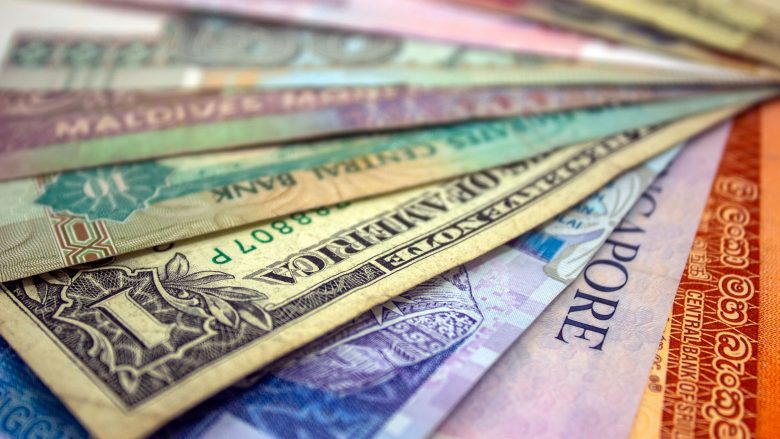
Currency markets in 2026 are navigating a complex interplay of interest rate differentials, geopolitical reconfiguration, and a simmering debate about the long-term trajectory of dollar hegemony that has been building since the weaponization of the dollar through sanctions imposed on Russia in 2022. The DXY dollar index — which measures the dollar against a basket of major currencies weighted heavily toward the euro, yen, and pound — has traded in a relatively narrow range in 2026, but beneath that apparent stability, significant cross-currents are reshaping individual currency pairs and the broader architecture of international monetary relationships.
The Dollar: Still Dominant, but Facing Structural Headwinds
The US dollar remains the world’s dominant reserve currency, medium of exchange for international trade, and safe haven asset of choice during financial market stress. Approximately 58% of global foreign exchange reserves are held in dollars, according to IMF COFER data — down from 71% in 2001 but still far exceeding any alternative. Dollar-denominated international debt accounts for approximately 60% of global outstanding debt securities. And in times of crisis — as observed in 2020, 2022, and during the 2026 Middle Eastern conflict — investors still rush to dollar assets as the primary safe haven.
But the trends are not favorable for dollar dominance in the long run. The share of global trade settled in dollars has declined from approximately 80% in 2014 to roughly 64% today as bilateral trade in non-dollar currencies — particularly Chinese renminbi, Indian rupees, and Gulf currencies settled against each other — has grown. The US current account deficit, which requires the US to import capital to finance domestic spending in excess of production, persists at approximately 3.4% of GDP, creating ongoing selling pressure on the dollar from trade flows that must eventually be equilibrated.
The dollar’s strength in 2025-2026 relative to most major currencies reflects primarily the interest rate differential: with US rates at 4.5-4.75% versus the ECB at 2.75% and Bank of Japan at 0.5%, dollar-denominated assets offer meaningfully higher yields, attracting capital flows that support the currency. As rate differentials narrow through the Fed’s anticipated rate cut cycle, this mechanical support for the dollar will diminish.
The Japanese Yen: Historic Weakness and Its Consequences
The Japanese yen’s multi-year depreciation has been one of the most consequential currency movements in global markets. The USD/JPY exchange rate, which stood at approximately 115 in early 2022, rose to nearly 160 in mid-2024 — a 39% depreciation of the yen against the dollar — before partially recovering to approximately 148-152 in early 2026 following the Bank of Japan’s historic policy normalization steps.
The Bank of Japan ended its negative interest rate policy in March 2024 and has subsequently raised its policy rate in three steps to 0.5% as of May 2026 — a dramatic normalization relative to the -0.1% rate that had been in place since 2016. For a central bank that had been the last major holdout for ultra-loose monetary policy, this normalization is significant, and the market implications extend well beyond Japan itself.
Japanese investors — institutional and retail — have accumulated approximately $3.6 trillion in foreign assets, primarily US Treasuries and European bonds, seeking the yields unavailable in Japan during its zero-rate era. As Japanese rates rise and the interest rate incentive to hold foreign assets diminishes, there is a latent risk of significant repatriation of this capital — a flow that would be yen-positive but could put upward pressure on yields in the markets from which capital is repatriated. This “BOJ normalization” risk is one of the most-discussed tail risks in global bond markets.
The Euro: Structural Questions Despite Short-Term Stability
The euro has been a relatively stable currency against the dollar in 2026, trading in a range of approximately 1.05-1.10. The ECB’s rate cuts to 2.75% reflect the eurozone’s weaker economic position relative to the US — particularly Germany, which is the eurozone’s largest economy and has been in or near recession for much of 2024-2025 due to its exposure to high energy costs and Chinese industrial competition.
Longer-term structural questions about the euro’s durability resurface periodically, driven by the absence of a full fiscal union among eurozone members — a structural weakness that became dramatically apparent during the European sovereign debt crisis of 2010-2012 and required the ECB’s “whatever it takes” intervention to resolve. The current fiscal rules embedded in the EU’s revised Stability and Growth Pact have been repeatedly bent or suspended, and the question of how the eurozone manages fiscal divergence between its fiscally conservative northern members and its more expansionary southern members remains unresolved.
The Renminbi: Ambition and Limits
China has explicit ambitions to expand renminbi internationalization, and progress has been meaningful but limited. The renminbi’s share of global payments as tracked by SWIFT has grown to approximately 4.7% — up from less than 2% five years ago but still far below the dollar’s 42% share. The growth reflects primarily the expansion of bilateral trade settled in renminbi between China and its trading partners, particularly Russia and Middle Eastern oil exporters.
The fundamental constraint on renminbi internationalization is China’s capital account controls, which limit the ability of foreign investors to hold and freely trade renminbi-denominated assets. A fully internationalized reserve currency requires free capital flows — something Beijing has been unwilling to permit because of the monetary policy and financial stability risks that free capital flows create. Until China resolves this fundamental tension, the renminbi will remain a regional currency with growing but structurally limited global role.
Currency Market Implications for Investors
For US-based investors, currency exposure is an often-overlooked component of international portfolio returns. A US investor who allocated to European equities in 2025 earned both the equity market return and the effect of euro-dollar movements — which were modestly negative given the euro’s slight depreciation against the dollar. Managing currency exposure through hedging — available through currency futures, forward contracts, or currency-hedged ETF share classes — adds cost but removes a significant source of volatility from international allocations.
The broader currency landscape of 2026 suggests watching the yen normalization most carefully. A disorderly repatriation of Japanese capital from foreign bond markets could create episodic volatility in Treasury yields and global fixed income prices. The gradual erosion of dollar reserve dominance is a long-term story with limited near-term market implications but meaningful implications for portfolio construction over a 10-20 year horizon. And the renminbi’s trajectory will be one of the most important variables in the geopolitical and economic story of the coming decade.
Sources: IMF COFER data, Bank of Japan, European Central Bank, Federal Reserve, SWIFT payment data, Bloomberg currency data, BIS Triennial Central Bank Survey