On February 28, 2026, the United States and Israel launched a joint military operation against Iran, killing Supreme Leader Ali Khamenei and other senior officials. Iran responded with missile strikes against US bases across the Middle East. What began as a military conflict rapidly became one of the most consequential economic events of the decade.
The Energy Shock
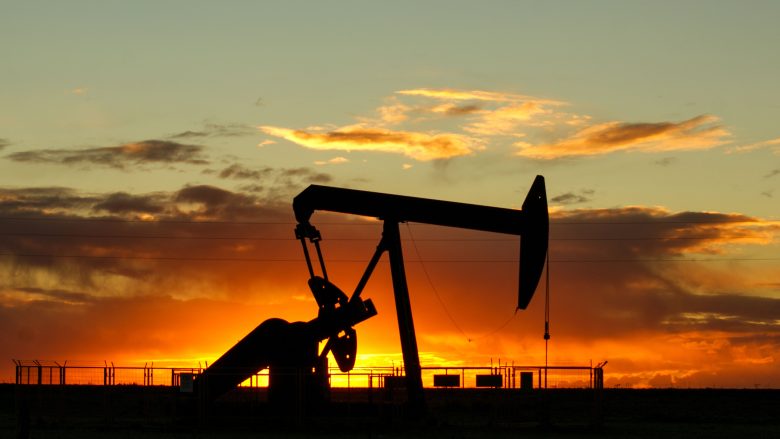
The Strait of Hormuz — the narrow waterway through which roughly 20–35% of the world’s seaborne crude oil trade passes — was effectively shut down in the days following the conflict. The International Energy Agency described the disruption as “the largest supply disruption in the history of the global oil market.” According to Goldman Sachs, around 14.5 million barrels per day of Persian Gulf crude production was taken offline at the height of the crisis, pushing global oil inventories into a record drawdown of 11 to 12 million barrels per day in April.
Brent crude oil prices surged 10–13% within days of the conflict’s outbreak, initially jumping to around $80–82 per barrel. By April, they had climbed above $100 per barrel. The World Bank’s April 2026 Commodity Markets Outlook projected energy prices to surge 24% for the full year — their highest level since Russia’s invasion of Ukraine in 2022 — and overall commodity prices to rise 16%.
The Macro Fallout
J.P. Morgan Global Research estimated that if Brent prices remained elevated through mid-year, global GDP growth for the first half of 2026 could be depressed by an annual rate of 0.6%. Higher energy prices fed directly into inflation: in a worst-case scenario where critical oil infrastructure suffers further damage, Brent could average as high as $115 per barrel for 2026, and inflation in developing economies could reach 5.8% — a level exceeded only in 2022 over the past decade.
For the United States, the energy shock arrived at an already difficult moment. Headline CPI is now at 4.2%, well above the Federal Reserve’s 2% target. The Producer Price Index rose 0.7% in February — more than double the expected gain — with nearly 30% of the increased cost of processed goods traceable to higher diesel prices, according to the Bureau of Labor Statistics.
Gold vs. Oil: The Safe Haven Paradox
Counterintuitively, gold — typically a refuge in geopolitical crises — has struggled in this environment. Since the war began on February 28, gold fell from $5,275 per ounce to around $4,735, a drop of over 11%. Morgan Stanley’s metals strategist Amy Gower explained why: “With the conflict triggering an energy supply shock that has reduced hopes for lower US interest rates, it is not surprising that gold has struggled to work as a safe haven this time.” Higher inflation means higher interest rates, which raises the opportunity cost of holding a non-yielding asset like gold. Oil, by contrast, benefits directly from supply disruption.
What to Watch
A ceasefire is technically in place, but key disputes remain unresolved and the Strait of Hormuz has not fully reopened. Fortune’s analyst coverage from late March warned that “Iran’s Hormuz toll booth points toward an L-shaped price plateau, not the V-shaped recovery traders want.” Analysts have also flagged the possibility that the conflict could drag into 2027, with the economic fallout “just getting started.”
For investors, businesses, and households, the practical implication is clear: energy costs will remain elevated for the foreseeable future, and any portfolio or budget that assumed a rapid return to 2024 energy prices will need to be revised.
Sources: World Bank Group, J.P. Morgan Global Research, Goldman Sachs, IEA, BLS, Morgan Stanley, Euronews, Fortune